
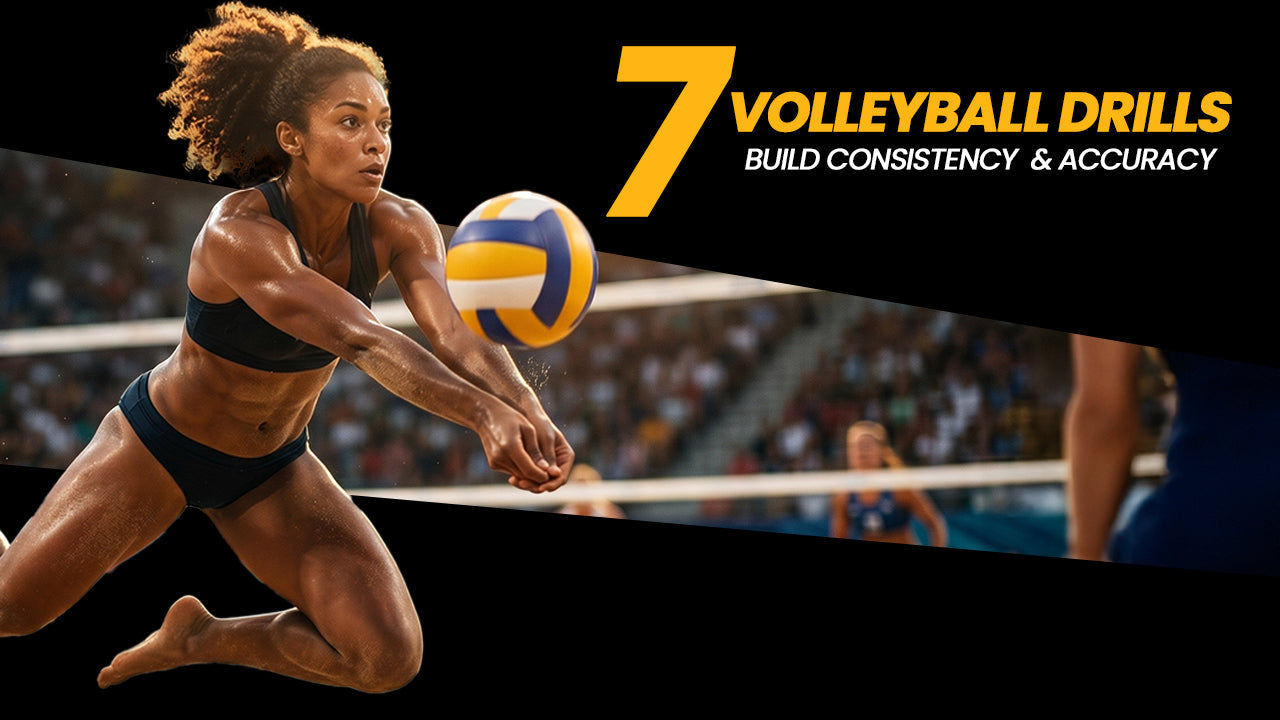
Practicing volleyball serving drills consistently is one of the fastest ways to add points to your game. The serve is the only skill in volleyball where you have total control — no opponent, no timing pressure, just you and the ball. Yet most players treat it as an afterthought. The players who win tight sets are usually the ones who spent extra time at the line developing a repeatable, aggressive serve. This guide walks through seven drills that will sharpen your serve from any spot on the court.
Why Most Players Struggle with Serving
Serving mistakes tend to fall into two categories: mechanical errors and mental errors. Mechanical errors — improper toss, inconsistent contact point, poor follow-through — produce serves that sail out or clip the net. Mental errors show up in tight situations when the body tightens, the toss changes, and muscle memory goes out the window.
The solution to both is simple: volume and intentionality. You need enough repetitions that the motion becomes automatic, and you need to practice under enough variety that pressure doesn't change your mechanics.
The drills below address both.
What You Need
Before you start, gather your equipment. You'll need:
- A regulation-sized court or open outdoor space
- Several volleyballs — having 6–10 speeds up practice significantly by reducing retrieval time
- An official size 5 volleyball that matches game weight and feel (training with the right ball matters)
- A target (tape on the floor, cones, or a teammate)
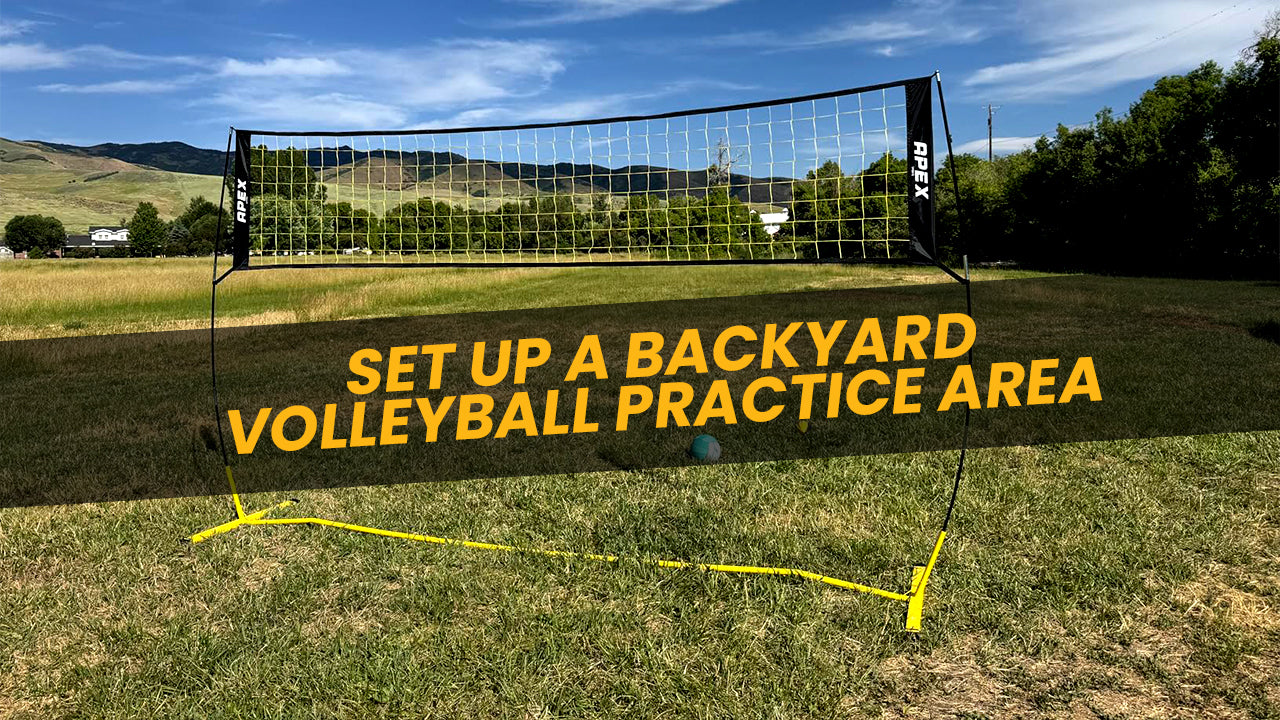
- Optional: a portable volleyball net if you're working outside a gym, so you have a real net to serve over
The 7 Drills
1. Towel Drill (Mechanics Foundation)
Purpose: Isolate arm swing and contact point without the stress of ball flight.
How it works: Hold a small towel in your serving hand. Go through your full serving motion — toss hand swing, arm load, and follow-through — snapping the towel at the peak of your reach. If you hear a loud snap, your contact is at the right point and your arm is accelerating properly. If the snap is weak or late, your contact point is too low or your elbow is dropping.
Reps: 3 sets of 10 swings.
Coaching cue: The snap should happen directly above your hitting shoulder, not in front of your face.
2. Short-Court Serving
Purpose: Build toss consistency and clean contact with reduced pressure.
How it works: Stand at the 3-meter line (attack line) and serve over the net using your full serving motion. The shortened distance forces you to control power and focus on mechanics rather than results. Once you can serve 8 out of 10 into the court from this distance, move back one step.
Reps: 3 sets of 10 serves. Progress toward the end line over 2–3 weeks.
Coaching cue: Toss the ball slightly forward and to your hitting side, not directly above your head.
3. Target Zone Serving
Purpose: Develop directional accuracy and force intentional aiming on every serve.
How it works: Mark four zones on the opposite side of the court — deep left corner, deep right corner, short left (near the antenna), and short middle. Call your zone before each serve. Award yourself 1 point for hitting the target zone, 0 for in-but-wrong, and -1 for a service error. Play to 10 points.
Reps: 3 rounds.
Coaching cue: Pick a specific spot within the zone, not just the general area. The more specific your target, the better your accuracy becomes over time.
4. Pressure Serving (Make 5 in a Row)
Purpose: Train composure under consecutive-success pressure.
How it works: You must serve 5 consecutive serves into a target zone. Every service error resets your count to zero. This drill mimics the mental pressure of a real game situation where the cost of a miss is high.
Reps: 3 attempts to complete the streak. Track your best consecutive make count each session.
Coaching cue: Develop a pre-serve routine — same breath, same ball bounce, same focus — and use it every single rep. This routine is what anchors you in real games.
5. Float Serve Freeze
Purpose: Develop a true float serve with minimal ball spin.
How it works: Serve toward the middle of the court, aiming for zero rotation on the ball. After each serve, watch the ball and count the number of full rotations before it crosses the net. Your goal is two or fewer rotations. A good float serve moves erratically in the air and is much harder to pass than a topspin serve.
Reps: 3 sets of 8 serves, focusing on contact quality over power.
Coaching cue: Strike the ball with a flat, firm wrist and pull your hand back immediately after contact — think "punch and freeze." Do not follow through with a full swing.
6. Competitive Serving Game
Purpose: Replicate game-like stakes and decision-making.
How it works: Two players alternate serves, each calling their target zone before serving. Each in-zone serve scores 1 point. Service errors give the opponent 2 points. First to 15 wins. If you're practicing alone, compete against your previous session's score.
Reps: Best of 3 games.
Coaching cue: This is where you practice using your pre-serve routine under competition. Never rush your serve just because your opponent is waiting.
7. Fatigue Serving
Purpose: Maintain serving mechanics when physically tired — the exact moment most serves break down in real games.
How it works: After a 10-minute conditioning block (suicides, jump training, or any high-intensity activity), immediately go to the service line and serve 15 balls into a target zone. Track your success rate. Over several weeks, you should see your under-fatigue success rate converge with your rested success rate.
Reps: 15 serves immediately post-conditioning, 2x per week.
Coaching cue: Slow your pre-serve routine down when tired — resist the urge to rush. Fatigue makes the mind impatient, but taking an extra two seconds always produces better results.
6-Week Practice Plan
Use this progression to build from mechanics to match-readiness:
Weeks 1–2 (Foundation): Towel Drill + Short-Court Serving. Focus only on mechanics — don't worry about target zones yet.
Weeks 3–4 (Accuracy): Add Target Zone Serving and Float Serve Freeze. Stop doing Short-Court Serving once you're consistently serving from the end line.
Weeks 5–6 (Pressure): Add Pressure Serving, Competitive Serving Game, and Fatigue Serving. Full sessions should combine at least one accuracy drill with one pressure drill every practice.
Minimum recommended volume: 50 serves per session, 3 sessions per week.
Equipment That Increases Repetitions
One of the biggest barriers to consistent serving practice is time — specifically, the time spent chasing balls. Players working outside team practice benefit from having the right setup.
A backyard volleyball net gives you a real net to work against rather than an imaginary one, which changes how you feel about clearing it on every rep. Training with a regulation training volleyball that matches competition weight and size ensures your muscle memory transfers directly to games. And if you're working on serve receive at the same time, a volleyball rebounder lets you practice passing returned balls back to yourself without a partner, making solo sessions significantly more productive.
The goal is to eliminate every possible reason not to get in extra reps.
Conclusion
The serve is the one skill in volleyball you can practice completely on your own terms. There's no excuse for poor serving when a wall or a backyard net is available and a structured drill plan makes every session count.
Work through these seven drills in order over six weeks, track your success rates, and you'll see measurable improvement within the first two weeks. Consistent practice with the right drills and training equipment can help players at every level accelerate development throughout the season. Take 20 minutes after your next team practice and commit to 50 intentional serves — that's all it takes to start.

Leave a comment
This site is protected by hCaptcha and the hCaptcha Privacy Policy and Terms of Service apply.