
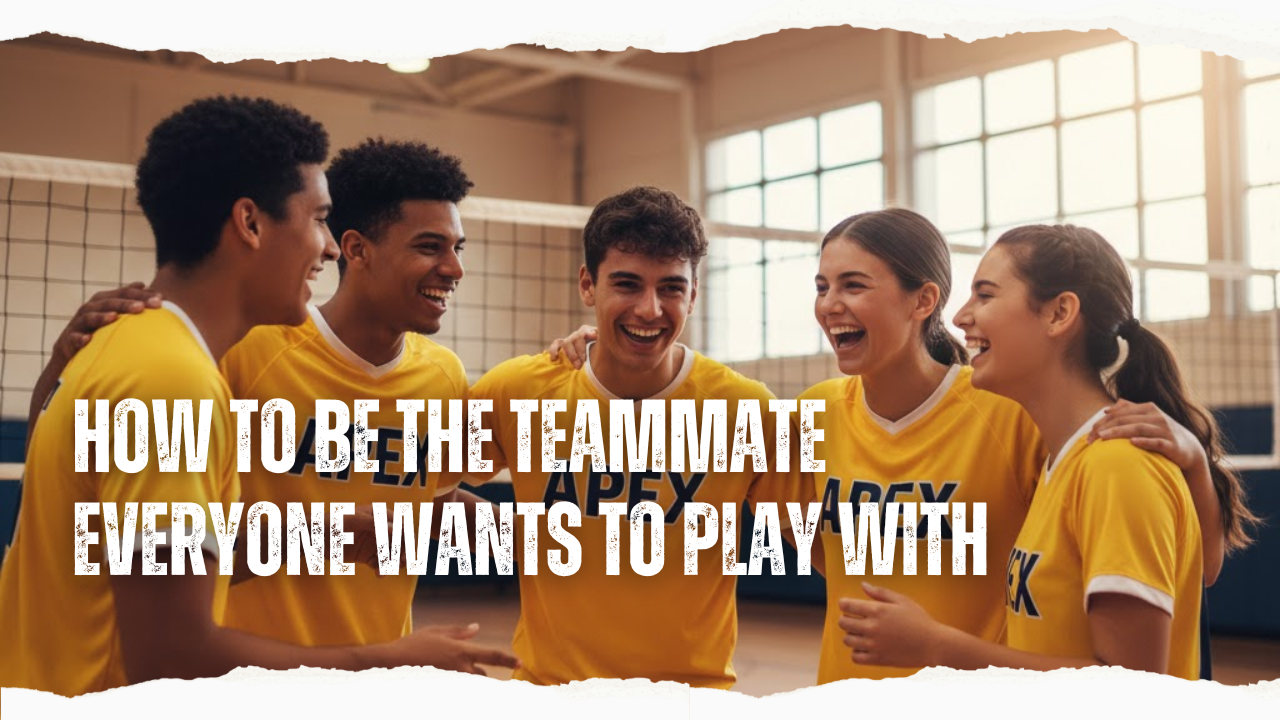
(Even If You're Not the Star Hitter!)
Hey everyone! Ever wonder what makes some people just click with their teammates, while others… well, not so much? In volleyball, where every single point depends on a chain of teamwork—pass, set, hit—being a great teammate is everything.
It’s not always about having the highest vertical or the hardest spike. Being a great teammate is about so much more, and it can seriously boost your team's performance, from intramurals to the championship game.
Let’s dive into some awesome ways you can become the teammate everyone wants on their squad!
1. Be a Positive Powerhouse (Shake Off the Errors!)
Nobody likes a player who groans after every shank or missed block. Negativity on the court is like a deflated volleyball—it just kills the game's momentum! When things get tough—maybe you're down 10-5 in the third set—truly great teammates stay positive.
Why it matters: A study by researchers at the University of Florida found that positive communication within teams can actually improve performance and team cohesion. Basically, when you're cheering each other on and staying upbeat, you're more likely to cover the court better and play better defense!
What you can do:
- Encourage others: A simple "Nice effort!" after a diving attempt or "Next point, let's go!" after an error makes a huge difference.
- Celebrate the little things: Did the libero make a tough dig? Did the setter place the ball perfectly, even if the swing was blocked? Acknowledge it!
- Focus on solutions: Instead of complaining about a bad call, ask, "Where was the open spot? How can we switch up the block?"
2. Communicate Like a Pro (Call the Ball!)
In volleyball, silence is deadly. Effective communication is absolutely key to being a good teammate. This isn't just about calling "Mine!" or "Help!" It means talking during drills, during matches, and in the huddle.
Why it matters: Research from the University of California, Berkeley, highlights that clear and open communication within a team leads to better decision-making and fewer misunderstandings. This is vital when the ball is up in the air and three players are converging on it.
What you can do:
- Use your voice: Call the ball every time: "Mine!", "Out!", "Tips!" or "Switch!"
- Listen to your setter: Pay attention to the calls and signals from your setter before every rally.
- Give constructive feedback: If you have advice, deliver it kindly and focus on the action. "Try taking a slightly wider approach on the slide," is better than "Why did you run that play?"
3. Be Accountable (Own Your Net Violations, Celebrate the Aces)
We all hit the net or send a serve into the parking lot. A great teammate owns their mistakes instead of blaming the pass or the floor. Even better, they’re the first one celebrating a teammate's perfect ace or a monster block!
Why it matters: A study published in the Journal of Applied Psychology found that individuals who demonstrate accountability and take responsibility for their actions are perceived as more trustworthy and reliable by their peers. This builds a strong foundation for team trust, especially when you need to rely on them to cover your block.
What you can do:
- Take responsibility: If you miss a serve, say "My fault! I'll get the next one!" and refocus.
- Offer to help: See someone struggling with a serve reception drill? Offer to shag balls for them or watch their footwork.
- Be a cheerleader: When a teammate gets a kill, a clutch block, or makes an amazing hustle play, be the loudest person on the bench or on the court!
4. Show Up (Be Ready to Go 'Six-Up' Mentally)
This means being early, having your knee pads on, your shoes tied, and ready to jump into the first drill. But "showing up" also means being present mentally, focused on the game plan, and ready to go "six-up"—the call for all six players to be alert and focused for the play.
Why it matters: A study from the University of Texas at Austin emphasizes that consistent attendance and engagement from team members are strong predictors of team success and morale. When everyone is committed to the physical and mental grind, the whole team benefits.
What you can do:
- Be punctual: Arrive early for practice and weight sessions.
- Be prepared: Have your gear ready, know the opponent's tendencies, and listen to the scouting report.
- Give 100% effort: Treat every drill like a match point. Your teammates need your best effort in every rotation!
5. Empathy and Understanding (Recognize the Pressure)
Volleyball has intense pressure. Maybe a teammate is struggling to pass because of tough criticism, or they're having an off night with their hitting. Being empathetic means trying to understand what others might be going through and offering support.
Why it matters: Research from Harvard University highlights that empathy within teams fosters stronger relationships and a more supportive environment, which can lead to better collaboration and problem-solving. When you understand why a player might be struggling, you can better adjust to support them on the court.
What you can do:
- Offer support: If a teammate is spiking into the net constantly, don't roll your eyes. Ask if they need to talk or if you can toss them some balls after practice.
- Be patient: Not everyone masters the quick-set right away. Encourage improvement.
- Avoid judgment: You never know what a teammate is dealing with outside of the court—maybe their body is hurting, or they had a bad day at school.
The Bottom Line
Being a great volleyball teammate isn't about being perfect. It's about being reliable, positive, communicative, and supportive. It’s about building a strong community where every player, from the defensive specialist to the middle blocker, feels valued and motivated. When you focus on these qualities, you won't just improve your team's performance, you'll also make the whole experience a lot more enjoyable for everyone involved.
So go out there, be awesome, and become the teammate everyone wants on their side of the net!



Leave a comment
This site is protected by hCaptcha and the hCaptcha Privacy Policy and Terms of Service apply.