
Hey APEX Fam,
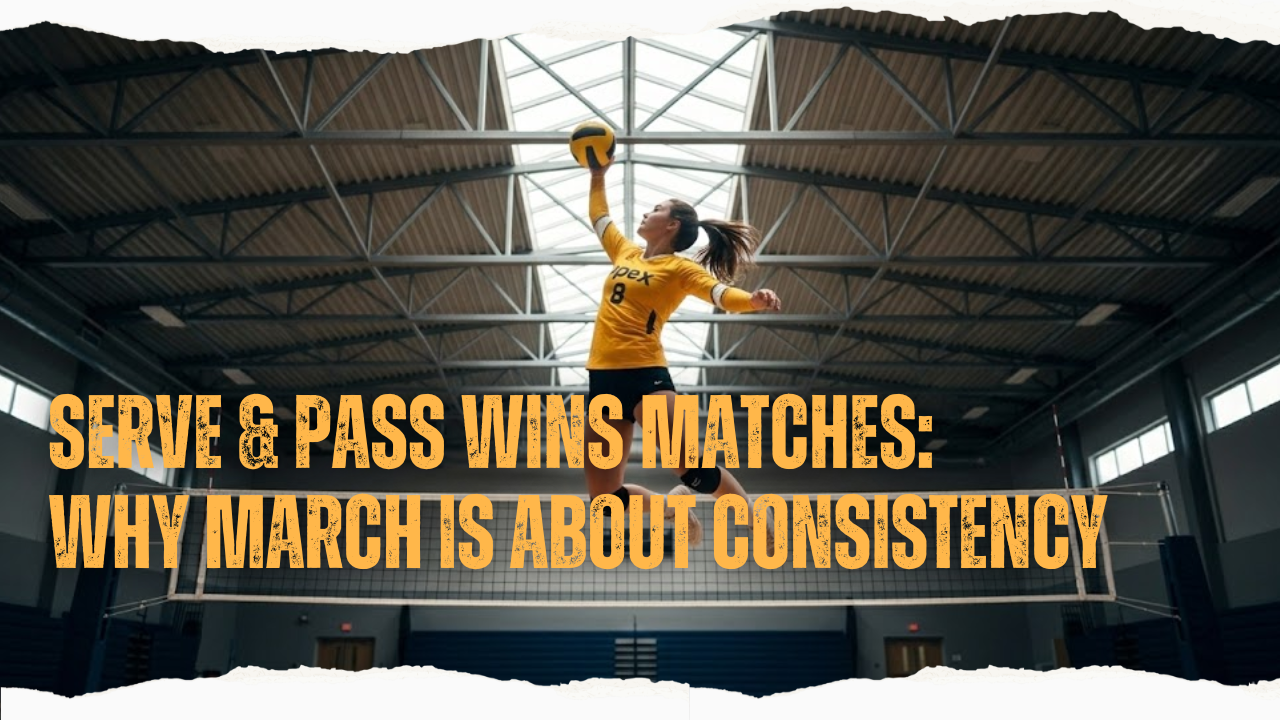
We’ve officially hit March. The "New Year" energy has faded, the mid-season grind is real, and the postseason is starting to peek over the horizon. In February, we talked about building vs. staying busy. This month, we’re narrowing our focus to the two skills that actually decide who walks away with the "W": Serving and Passing.
You’ve heard coaches say it a million times: "Serve and pass wins matches." But why? Because they are the first contacts. If you can’t pass, you can’t run an offense. If you can’t serve tough, the other team runs theirs.
Here is how to make March the month you become the most consistent player on the court.
1. The "First Contact" Obsession
In volleyball, momentum is everything. Research published in the Journal of Science Extension Research (2024) found a direct correlation between the quality of serve-reception (good, mediocre, or bad) and the ultimate outcome of winning or losing a point in high school matches. Simply put: better passes lead to more wins.
Consistency isn't about being perfect; it's about narrowing your "miss" margin. When you’re training with your Apex Sports Volleyball Training Net, don’t just hit the ball over. Aim for a specific target—like a ball cart placed at the target-setter position.
Pro Tip: Treat every passing rep like it’s game point. Watch the server’s hand, stay low, and focus on a quiet platform.
2. Serving Under Pressure
Serving is the only time in volleyball where you have total control. But that also means all the pressure is on you.
Studies on serving effectiveness show that while high-speed jump serves score more points, they also lead to more errors. For high school athletes, the goal is Aggressive Consistency. You want a serve that disrupts the opponent's rhythm without handing them a free point.
The "Big Point" Drill: Next time you're practicing with your Apex Professional Volleyball, try this:
- Serve 5 balls in a row to Zone 1.
- If you miss one, you start over.
- On the 5th ball, have a teammate scream or cheer to simulate a loud away-game crowd. Training your brain to tune out the noise ensures that when the game is on the line, your mechanics stay locked in.
3. The "Next Play" Mentality: Resetting After Errors
Mistakes are going to happen. You’ll shank a pass. You’ll serve into the bottom of the tape. What separates the elite athletes from the "busy" ones is the Mental Reset.
Sports psychologists often recommend a "Physical Reset Routine." This is a quick action—like adjusting your kneepads, wiping your shoes, or taking one deep "box breath"—that signals to your brain: That play is over. Focus on the next one.
According to research in the Journal of Strength and Conditioning, athletes who use specific performance cues (like "feet early" or "high contact") recover faster from errors. Instead of thinking "Don't mess up," give your brain a job. Tell yourself: "Platform to target."
Gear Up for the Grind
Consistency is a choice you make every day in the gym. Whether you’re working on your vertical with a Spike Trainer or perfecting your float serve, having the right tools makes the difference.
March is where the "busy" players plateau and the "builders" take off. Let's get to work.
What’s your go-to mental reset cue? Let us know in the comments!
Check out the full line of professional training gear at Apex Sports to take your game to the next level.


Leave a comment
This site is protected by hCaptcha and the hCaptcha Privacy Policy and Terms of Service apply.