
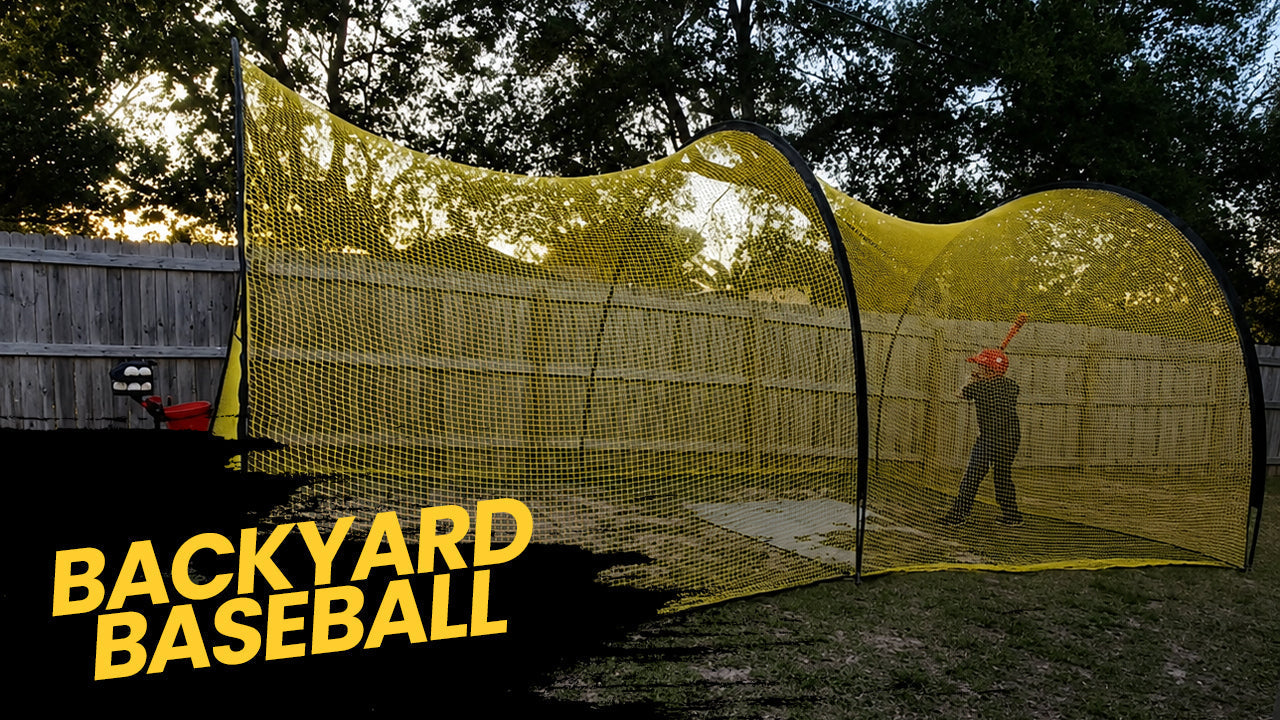
Backyard baseball training has become one of the most reliable ways for players to close the gap between team practices. Most travel and school teams only get the field two or three times a week, and games eat into whatever repetitions are left. Players who improve fastest are usually the ones getting extra swings, throws, and reps at home — not necessarily the ones with more natural talent. This guide covers how to build a simple, effective home practice area and the drills that make the most of it.
The Problem: Not Enough Reps Between Practices
Skill development in baseball is almost entirely rep-dependent. Hitting mechanics, pitch recognition, and throwing accuracy all improve through repetition, and repetition requires two things most players don't have enough of: field access and a throwing or hitting partner.
A typical week of team practice might give a player 20–30 live swings and a handful of fielding reps. That's not enough volume to build or maintain mechanics, especially for younger players still developing muscle memory. Parents end up driving to batting cages, players stop practicing in the off-season, and skills that were sharp in June are rusty again by August.
The fix isn't more team practice — it's a small, functional setup at home that removes the friction between "I should practice" and actually doing it.
The Solution: A Simple, Repeatable Home Setup
You don't need a full backyard diamond. You need three things: a safe place to hit, a way to field or return throws without a partner, and a target to build pitching or throwing accuracy. A corner of a backyard, driveway, or even a garage with the door open can work.
Hitting Mechanics Without a Pitcher
The biggest barrier to hitting reps at home is that most players don't have someone available to throw to them every day. The workaround is a stationary swing trainer that isolates your swing path without needing a live pitch. Working off a fixed setup lets a player take 50–100 swings in 15 minutes, focusing purely on mechanics: hand path, hip rotation, and contact point, without worrying about pitch location or timing.
Coaching cue: Start every hitting session with 10 slow-motion swings before adding speed. Rushing mechanics work defeats the purpose — the goal is to groove the correct pattern, not to hit hard.
Fielding and Throwing Without a Partner
Fielding reps disappear fastest once team practice ends, because fielding requires someone to hit or throw the ball to you. A rebound net solves this by returning a thrown ball at a realistic angle and speed, letting a player field grounders, backhands, and short-hop throws solo. This is also one of the best tools for warming up an arm before a game — a player can get 20–30 throws in without needing a catch partner.
Coaching cue: Vary your throw height and angle into the net so the ball comes back differently each time. Fielding the exact same rebound over and over builds a predictable habit, not real fielding instincts.
Pitching and Throwing Accuracy
For pitchers and infielders alike, accuracy work benefits enormously from a fixed target. Throwing at a defined strike zone with visible quadrants gives immediate feedback — you know exactly whether a pitch would have been a ball or a strike, and where it missed. This kind of target work is far more valuable than throwing into open space, because it forces intentional aim on every single rep.
Coaching cue: Call your zone before every throw, just like a serve in volleyball. Predetermining the target and then checking your result against it is what actually builds command over time — random throwing does not.
30-Minute Daily Practice Plan
Use this structure for a focused, low-equipment home session. It's designed to fit into a weekday evening without requiring a field or a training partner.
Minutes 0–5: Warmup Light arm circles, a few stretches, and 10 easy tosses into a rebound net to get the arm moving. Don't skip this — cold-arm throwing at full effort is the fastest way to get hurt.
Minutes 5–15: Hitting Block Take 60–80 swings on a fixed swing trainer. Break this into three rounds of 20–25 swings with a short rest between each. First round: slow-motion mechanics work. Second round: normal speed, focus on a specific cue (hip rotation, hand path, or extension). Third round: game-speed swings.
Minutes 15–25: Fielding and Throwing Block Alternate 10 reps fielding off a rebound net with 10 accuracy throws at a fixed target. If you're a position player, weight this toward fielding. If you're a pitcher, weight it toward the target work, focusing on hitting specific quadrants of the strike zone.
Minutes 25–30: Cool-Down Light stretching and a short mental review — what felt good, what needs work tomorrow. Keeping a simple notebook of what you focused on each session helps you track progress over weeks instead of guessing.
Weekly structure: Aim for 4–5 sessions per week, with at least one full rest day for the throwing arm. Rotate emphasis — two hitting-heavy days, two fielding/throwing-heavy days, and one mixed session.
Equipment Recommendations
Building a functional home setup doesn't require a huge investment, but the right equipment makes the difference between a productive 30 minutes and a frustrating one where you're chasing balls more than practicing.
For a dedicated hitting space, a backyard batting cage creates a contained area to hit full-speed line drives without losing balls in the yard or worrying about property damage — it's the single biggest upgrade for anyone doing regular swing work at home. If space or budget is tighter, a portable batting cage that sets up and breaks down quickly is a practical alternative for driveways or smaller yards.
For fielding and arm care, a baseball rebounder is the most versatile piece of solo training equipment a player can own — it doubles as a fielding trainer and a throwing partner. Some players call this a pitchback net, and it's especially useful for infielders who need reps on short-hop and backhand plays that are hard to replicate any other way.
For hitting mechanics specifically, a baseball swing trainer lets players isolate their swing path and work on contact point without needing a pitcher, which is especially valuable for younger players still building foundational mechanics.
None of this equipment requires a lot of space. A corner of a backyard or a driveway is enough to run the full 30-minute plan above on a near-daily basis.
The players who develop fastest aren't the ones with the most talent — they're the ones who find a way to get extra reps between practices. A backyard baseball training setup doesn't need to be elaborate: a hitting area, a rebound net, and a throwing target cover hitting, fielding, and accuracy work in about 30 minutes a day.
Start small. Pick one piece of equipment that addresses your biggest gap right now, whether that's hitting reps, fielding reps, or throwing accuracy, and build the daily habit from there. Consistent practice with the right drills and training equipment can help players accelerate development throughout the season.

Leave a comment
This site is protected by hCaptcha and the hCaptcha Privacy Policy and Terms of Service apply.