
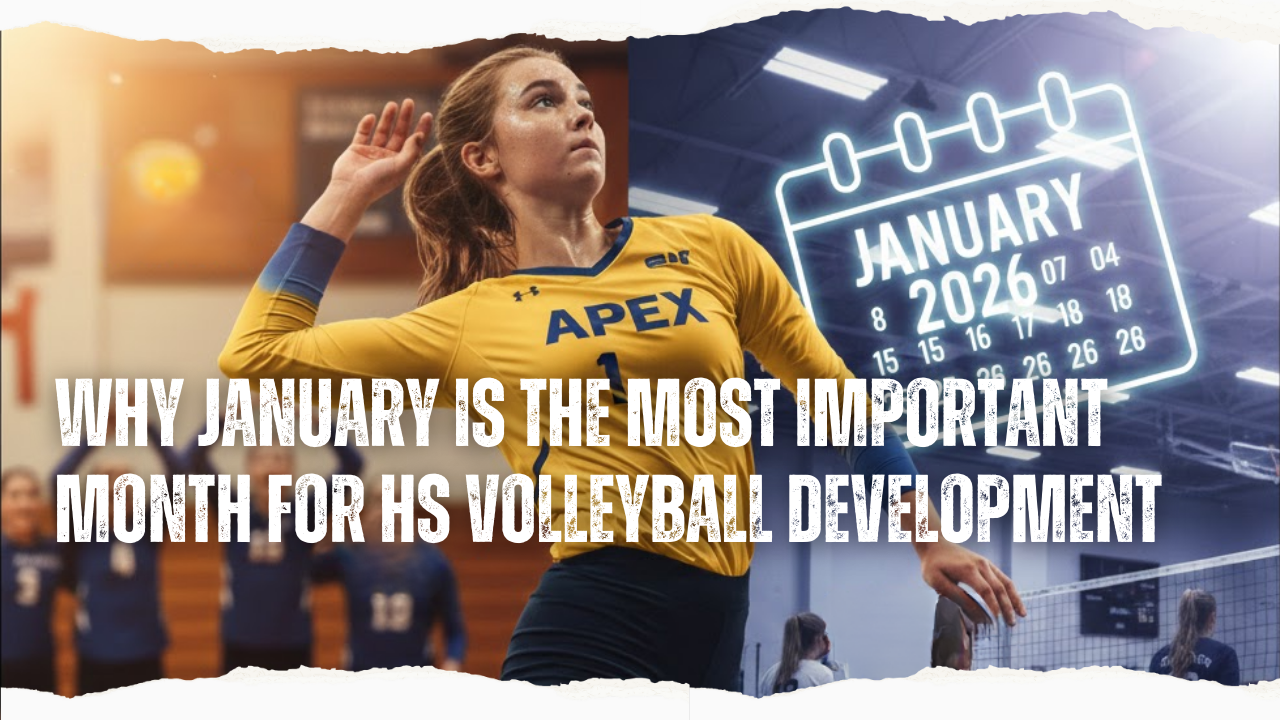
For many high school volleyball players, the competitive season feels like a distant memory, and the next one a far-off dream. Yet, coaches and sports scientists often agree: January is arguably the most critical month for a high school volleyball player's year-round development. It’s a foundational period that sets the stage for future success—often without the pressures of games, lineups, or tryouts.
This is the month where real growth happens.
Let’s break down why January matters so much and how structured, intentional training—supported by the right tools—can accelerate development.
1. The Prime Window for Foundational Skill Refinement
During the season, practices are often dominated by tactical systems, rotations, and quick fixes. January offers something rare: time.
Time to slow things down, break skills apart, and rebuild them correctly—without the pressure to perform immediately.
Research on deliberate practiceby K. Anders Ericsson shows that meaningful skill development comes from focused, intentional reps on specific weaknesses, usually outside of competition. January creates the ideal environment for this kind of work.
This is the perfect time for players to dial in fundamentals like:
- Serving mechanics– refining the toss, contact point, and follow-through
- Passing platform development– consistent angles, arm extension, and footwork
- Setting hand positioning and footwork– accuracy, tempo, and repeatability
-
Hitting approach and arm swing– efficient movement patterns for power and control
Where Apex Training Tools Come In
One of the biggest challenges in off-season skill work is getting enough quality reps without needing a full team or coach present. That’s where Apex products shine.
Allows athletes to train passing, setting, and reaction skills solo, reinforcing consistency through high-rep feedback.
Ideal for setters and hitters working on footwork patterns, hand placement, and timing without game pressure.
Helps athletes refine arm swing mechanics and contact timing safely, especially when rebuilding technique in the off-season.
January reps don’t need to be flashy—they need to be intentional.
These tools help athletes accumulate high-quality repetitions that directly translate into in-season consistency.
2. Building a Resilient Athletic Foundation: Injury Prevention and Strength
The competitive season takes a toll on a young athlete’s body. January—right after the season—may be the best opportunity all year to reset, rebuild, and bulletproof the body.
Studies published in the Journal of Strength and Conditioning Research consistently show that structured off-season training significantly reduces injury risk in adolescent athletes. This phase allows players to train proactively instead of reacting to pain or fatigue.
Key January priorities include:
- Progressive overload– rebuilding strength gradually instead of rushing intensity
- Addressing muscular imbalances– especially in shoulders, hips, knees, and ankles
- Developing power and explosiveness – introducing plyometrics and jump training safely
-
Improving mobility and flexibility– restoring range of motion after a long season
Training Smarter, Not Just Harder
January is when athletes should focus on movement quality just as much as strength numbers.
Using structured training aids—like Apex’s skill-based systems—helps reinforce proper mechanics while reducing unnecessary joint stress. When athletes practice correct movement patterns repeatedly (especially in jumping, landing, and arm swing mechanics), they build strength that actually transfers to the court—and lasts through the season.
Starting this process in January ensures players aren’t scrambling to “get in shape” later. Instead, they enter spring and summer training stronger, healthier, and more prepared.
Final Takeaway
January isn’t a downtime month—it’s a development month.
High school volleyball players who use this window to refine fundamentals, rebuild their bodies, and train with intention gain a massive advantage over athletes who wait until tryouts or summer camps to get serious.
With the right mindset—and the right training tools—January becomes the foundation for:
- Cleaner skills
- Fewer injuries
- More confidence
-
Better performance when it matters most
Championship seasons aren’t built in August. They’re built in January.

Leave a comment
This site is protected by hCaptcha and the hCaptcha Privacy Policy and Terms of Service apply.